Questions? Call us:
+44 23 8111 2681US

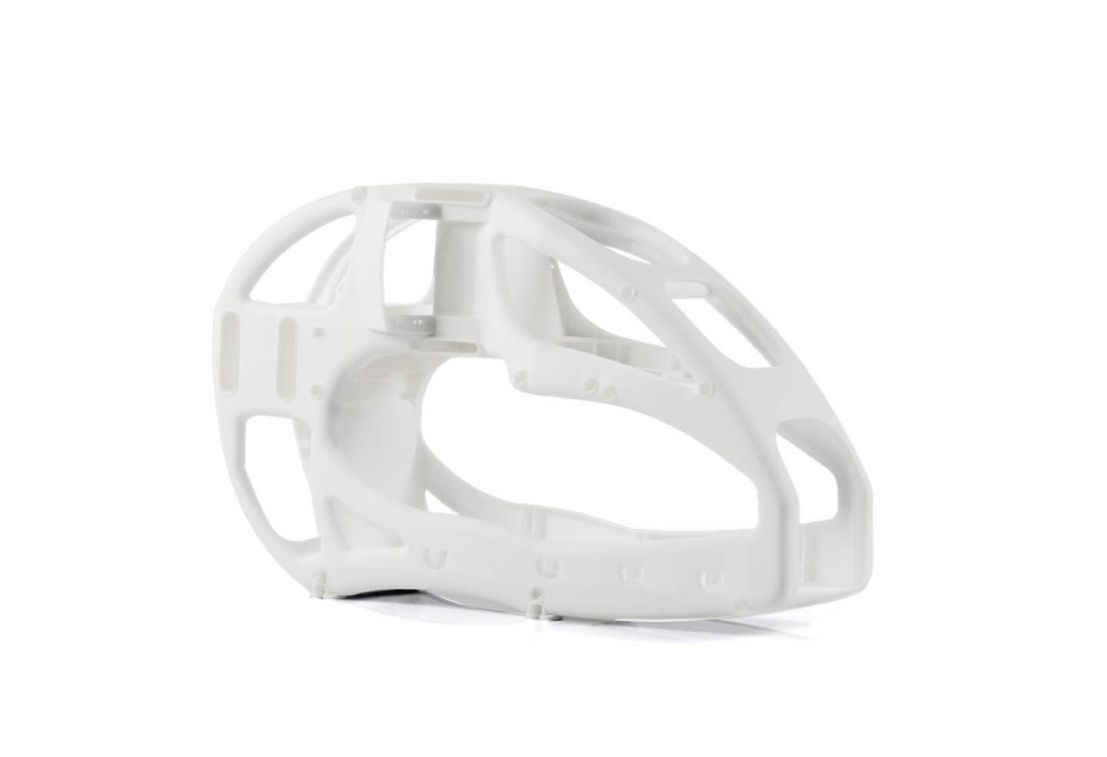
Upload your CAD files, Receive your customized custom Stereolithography (SLA) printing quote. Choose from a variety of process materials to suit your needs.
Stereolithography (SLA) starts with a vat of liquid photopolymer or resin that is cured by a digital light source as it repeats this process to build parts layer by layer.
Upload custom models for functional. high-performing 3D pieces. Take the guesswork out of manufacturing development with 3D printed prototypes for meetings, testings and perfection of final parts.
Ready-to-manufacture 3D prints with one step production from raw material to final part.
UTR 8360 is a high-precision photosensitive resin known for its exceptional dimensional accuracy and ability to capture intricate details. It produces parts with a remarkably smooth surface finish and features excellent waterproof and moisture-proof properties, ensuring structural stability in various environments.
As the most widely utilized photosensitive resin, UTR 8360 offers enhanced toughness, temperature resistance, and superior surface quality. It is highly versatile and supports various post-treatment processes such as spray painting, dyeing, and silk screen printing, making it a reliable choice for both functional prototypes and detailed models.


A supported wall is connected at least on two sides of the wall, while an unsupported wall is connected only on one side of the wall.
Walls that do not meet the minimum requirements may not survive printing and cleaning processes. Additionally, models may still be rejected based on the wall geometry of the model.
Please consider the size of your model and reinforce the walls or add support structures as needed as minimum guidelines will not always be adequate for large models.

A wire is a circular, rectangular or even triangular feature that is thinner in its unconnected directions than its length. A supported wire is connected at least on two sides of the model, while an unsupported wire is connected on one side of the model.
Wires that do not meet the minimum requirements may not survive printing and cleaning processes. Additionally, models may still be rejected based on the wire geometry of the model.
Please consider the size of your model and reinforce the wires or add support structures as needed as minimum guidelines will not always be adequate for large models.

For text, the ratio between width and depth, should be 1:1 and sans-serif fonts are preferred for line weight consistency.
.svg)
Escape holes are necessary to empty the support material of a hollow model. Two escape holes at the opposite ends of the model is optimal for the support removal process.
Please consider the size of your model and make the escape holes bigger or add more escape holes as needed as minimum guidelines will not always be adequate for large models.


A single escape hole at the end of a cavity will not allow material in the corners near the escape hole to fully escape. So we recommend multiple escape holes at both ends of the cavity.
Clearance is the space between two individual parts in a model.
If the space among the individual parts do not meet the minimum clearance, then parts can fuse together or can be difficult to clean.
This is important for movable pieces like hinges, gears, etc.
The bounding box is a 3D imaginary outline of a box that encloses the smallest area occupied by your model.
Your model must be within the minimum and maximum bounding box sizes. If the size of the model is close to the maximum bounding box, then the printing orientation will be restricted.
For example: a product with dimensions of 50x50x100 mm can be 0.15 mm + 0.0015*100 mm = 0.3 mm bigger or smaller in any direction.
Parts in as Fast from 7 business days
Get Instant QuoteSubscribe for workflow updates and insights.
Review our privacy policy for details.

Our website use cookies. By continuing navigating, we assume your permission to deploy cookies as detailed in our Privacy Policy.