Questions? Call us:
023 811 12681EN
Break down design barriers and grow your business with manufacturing available for you. Create and adapt.

Upload your CAD files, Receive your customized custom Fused Deposition Modeling (FDM) printing quote. Choose from a variety of process materials to suit your needs.
ABS
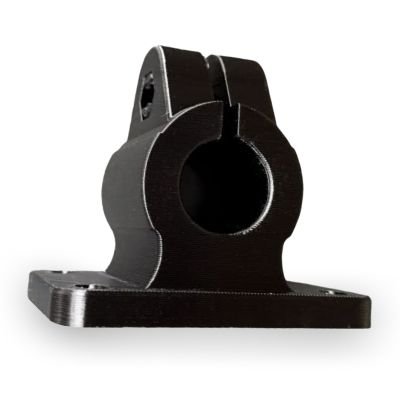
Acrylonitrile butadiene styrene (ABS) filament is used in the Fused Deposition Modelling (FDM) type of 3D printing. The thermoplastic material is heated, and layers of the material are layered over one another. The extrusion temperature for ABS filament typically ranges from 230 to 260°C, A solid material used in the moulding industry is ABS plastic. It is a thermoplastic polymer that can make good quality products without having to spend so much money on them. A heated bed is essential for ensuring proper adhesion and preventing warping when printing with ABS.
80% of it is used in the printed
ABS material
products. It is most commonly used in the FDM printing process. Its usage’s main reasons are its excellent temperature tolerance and its composition, which makes it liable to all such conditions. ABS has a higher glass transition temperature, allowing it to withstand higher temperatures before deforming. Compared to other materials like PLA and nylon,
ABS offers better strength and heat resistance.
ABS Premium
To print ABS successfully, understanding the right printing parameters is crucial. The cost of raw materials for ABS is relatively low, making it an affordable option for many users. ABS also boasts strong temperature resistance and heat resistance,
making it suitable for high-temperature applications.
STRENGTHS
Lead Time 3 days, Low-cost, good quality
WEAKNESSES
Print layers are likely to be visible


For example: a product with dimensions of 50x50x100 mm can be ±0.5% with a lower limit of ±050 mm (±0.020″) bigger or smaller in any direction.
Yes, ABS filament is a popular choice for 3D printing due to its excellent mechanical properties, including high impact resistance, toughness, and heat resistance. It is ideal for producing durable parts suitable for industrial applications, automotive components, and consumer products. However, ABS can be more challenging to print than some materials like PLA, as it requires a heated bed and controlled printing environment to prevent warping.
The cost of 3D printing varies depending on factors such as the material used, the complexity and size of the design, the required post-processing, and the printing technology. For ABS filament 3D printing service, prices typically start from a minimum order value and increase with the amount of filament used and any additional finishing work. Many services offer instant quotes online to provide accurate pricing based on your specific project.
Yes, ABS generally offers better strength and durability compared to PLA. It has higher impact resistance and heat tolerance, making it more suitable for functional parts that require toughness and the ability to withstand higher temperatures. PLA is easier to print and biodegradable, but is more brittle and less heat resistant than ABS.
ABS and TPU serve different purposes. ABS is a rigid thermoplastic known for its strength, durability, and heat resistance, making it ideal for structural and mechanical parts. TPU, on the other hand, is a flexible, rubber-like material used when elasticity and impact absorption are needed. Choosing between ABS and TPU depends on the specific requirements of your project, such as rigidity versus flexibility.
ABS filament is widely used in 3D printing to create durable and functional parts. Its excellent impact strength and heat resistance make it ideal for industrial applications, automotive components, and consumer products such as LEGO bricks. ABS is suitable for producing prototypes, rapid prototyping projects, and end-use parts that require toughness and durability.
Compared to PLA, ABS offers superior mechanical properties, including higher impact resistance, heat tolerance, and toughness. While PLA is easier to print and biodegradable, ABS is more suitable for applications requiring durability and resistance to higher temperatures. However, ABS can be more challenging to print due to its tendency to warp and requires a heated bed and controlled environment.
Common drawbacks of ABS include its susceptibility to warping and cracking during cooling, which can affect print accuracy and quality. ABS also emits fumes during printing that may require adequate ventilation. Additionally, ABS is not biodegradable and has an environmental impact compared to more eco-friendly materials. Its higher shrinkage rate necessitates precise quality control and printing conditions to produce quality parts.
IP protection is what most people are worried about when it comes to 3D printing because we get orders in which we have to copy the original design precisely.
We uphold strict confidentiality by default for all customer communication, projects, and models. Should you prefer a formal agreement, we offer standard NDAs or can review your own. Your trust is our priority.
Parts in as Fast in 3 business days
Get Instant Quote
Subscribe for workflow updates and insights.
Review our privacy policy for details.

Our website use cookies. By continuing navigating, we assume your permission to deploy cookies as detailed in our Privacy Policy.









![Nylon 12/PA [SLS]](https://cdn.prod.website-files.com/5e1b724edb4d525389fc347f/6623c1e1ca3e7be3c3df94c1_Nylon%2012%20%5BSLS%5D.jpg)



![Nylon12/PA [MFJ]](https://cdn.prod.website-files.com/5e1b724edb4d525389fc347f/6623c20d330fd69fdde60af7_Nylon%20PA%2012%20%5BMJF%5D.jpg)
.jpg)