Questions? Call us:
023 811 12681EN
Break down design barriers and grow your business with manufacturing available for you. Create and adapt.

Upload your CAD files, Receive your customized custom Fused Deposition Modeling (FDM) printing quote. Choose from a variety of process materials to suit your needs.
3D Print
materials used for the replacement of functional moulded pieces with good corrosion tolerances. Nylon 6 and polyamide (PA) are thermoplastics characterized by good mechanical characteristics,
excellent chemical and abrasivability.
Nylon 6 is
part of the synthetic polyamide group known for high durability, strength and flexibility. This 3D printing materials are often used for variants of PA 12 and PA11, although some variations of PA 6 and PA 2220 are also
offered for printing 3D.
Besides nylon,
the material can also be reinforced to improve thermal or mechanical properties including strength or resiliency in abrasion. Because of outstanding mechanical features as well as strong chemical impacts and heat-resistant properties, 3D printed nylon is ideal for function and prototype parts.
Another good benefit is that it's relatively cheap to use.
STRENGTHS
Lead Time 3 days, Low-cost, good quality
WEAKNESSES
Print layers are likely to be visible


For example: a product with dimensions of 50x50x100 mm can be ±0.5% with a lower limit of ±050 mm (±0.020″) bigger or smaller in any direction.
Nylon 6 is a highly versatile material prized in nylon 3d printing for its outstanding mechanical properties, including exceptional durability, impressive strength, and remarkable flexibility. These qualities make it an ideal choice for producing strong, functional parts and prototypes that must perform reliably in demanding industrial environments. Its excellent chemical resistance and good abrasion resistance enable it to withstand harsh chemicals and repeated mechanical wear, making it suitable for applications across various industries such as automotive, consumer goods, and industrial machinery. Additionally, Nylon 6’s ability to maintain dimensional stability and resist moisture absorption when properly stored enhances its print quality and overall material performance.
One of the main challenges of printing Nylon 6 is its strong tendency to absorb moisture from the air, which can significantly affect print quality, layer adhesion, and surface finish. To ensure optimal results, it is crucial to keep the nylon filament dry by storing it in an airtight container or dry box when not in use. Using dry filament during the printing process helps prevent issues such as bubbling, poor layer bonding, and weak mechanical properties in the printed parts. Additionally, achieving strong adhesion and minimizing warping requires a heated build plate with carefully controlled bed temperature settings. For printing complex parts with intricate geometries, support structures may be necessary to maintain accuracy and stability throughout the print. Proper environmental controls, such as an enclosed build chamber and avoiding drafts, further help prevent warping and improve overall print quality. By managing moisture absorption and optimizing print conditions, most users can successfully print durable and high-quality nylon parts suitable for demanding industrial and functional applicati
Nylon 6 can be enhanced by reinforcing it with carbon fiber to improve stiffness, strength, and heat resistance, resulting in lightweight components that can handle high loads and temperatures. Selective laser sintering (SLS) technology is commonly used because it offers excellent mechanical properties and dimensional stability while enabling complex shapes with minimal layer lines. However, FDM printing of nylon is also common, though it may require more attention to support structures and post-processing to achieve high-quality surface finishes.
Nylon PA6, also known as polyamide 6, is a versatile thermoplastic prized for its mechanical strength, toughness, and chemical resistance. Produced through the polymerisation of caprolactam, it offers high tensile strength and a low friction coefficient, making it reliable in demanding environments. Its abrasion resistance, impact durability, and moisture resilience make it suitable for functional parts in automotive, electrical, consumer goods, and industrial applications. Because it is cost-effective and easy to process, it is widely used for both prototypes and end-use components.
Nylon PA6 CF is a carbon-fibre-reinforced version of Nylon PA6 designed to deliver superior performance. The reinforcement significantly increases stiffness, strength, heat resistance, and layer adhesion, which is beneficial for applications needing a high strength-to-weight ratio, such as tooling, brackets, or structural components. While Nylon PA6 CF offers enhanced mechanical characteristics, standard Nylon PA6 remains a more economical choice for less demanding applications where the added rigidity is not required.
Both Nylon PA6 and Nylon PA6 CF provide excellent resistance to many chemicals, including oils, fuels, and various industrial fluids. This makes them suitable for components exposed to harsh environments or mechanical wear. However, for applications where exceptional chemical resistance or high-temperature stability are critical, high-performance materials such as PEEK or Ultem may be better suited, as they can withstand more extreme conditions without degrading.
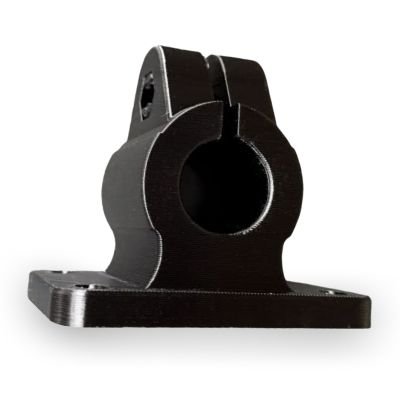
Nylon PA6 is primarily manufactured using Fused Deposition Modeling (FDM), a cost-efficient method that offers fast turnaround but typically leaves visible layer lines on printed parts. For applications requiring improved mechanical properties and surface finish, Selective Laser Sintering (SLS) with Nylon PA12 is often recommended. SLS uses a laser to fuse powdered nylon layer by layer, resulting in dense, precise parts with minimal layer visibility and excellent dimensional stability, ideal for functional prototypes and production-grade components.
IP protection is what most people are worried about when it comes to 3D printing because we get orders in which we have to copy the original design precisely.
We uphold strict confidentiality by default for all customer communication, projects, and models. Should you prefer a formal agreement, we offer standard NDAs or can review your own. Your trust is our priority.
Parts in as Fast in 3 business days
Get Instant Quote
Subscribe for workflow updates and insights.
Review our privacy policy for details.

Our website use cookies. By continuing navigating, we assume your permission to deploy cookies as detailed in our Privacy Policy.
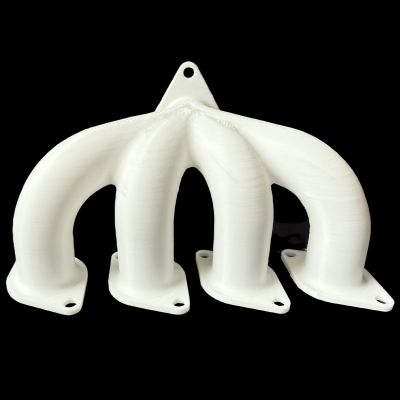


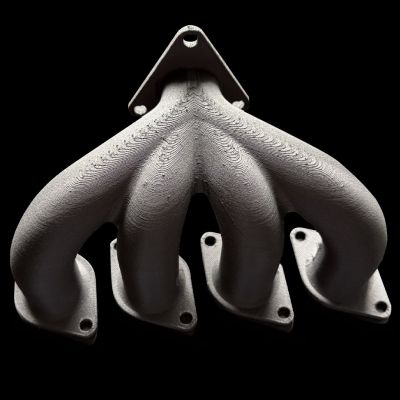
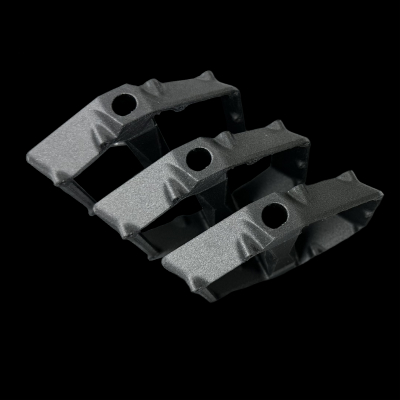







![Nylon 12/PA [SLS]](https://cdn.prod.website-files.com/5e1b724edb4d525389fc347f/6623c1e1ca3e7be3c3df94c1_Nylon%2012%20%5BSLS%5D.jpg)


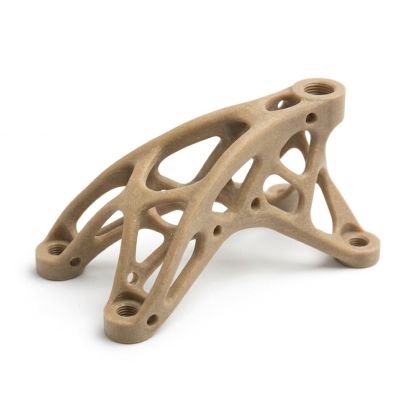

![Nylon12/PA [MFJ]](https://cdn.prod.website-files.com/5e1b724edb4d525389fc347f/6623c20d330fd69fdde60af7_Nylon%20PA%2012%20%5BMJF%5D.jpg)
.jpg)