Questions? Call us:
023 811 12681EN
Break down design barriers and grow your business with manufacturing available for you. Create and adapt.

Upload your CAD files, Receive your customized custom Fused Deposition Modeling (FDM) printing quote. Choose from a variety of process materials to suit your needs.
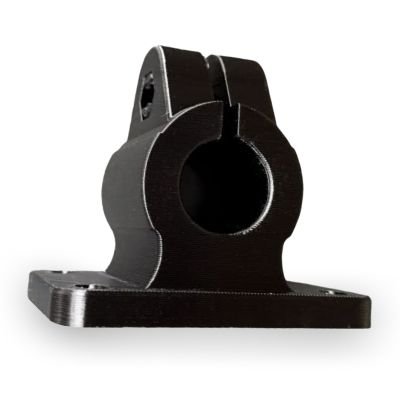
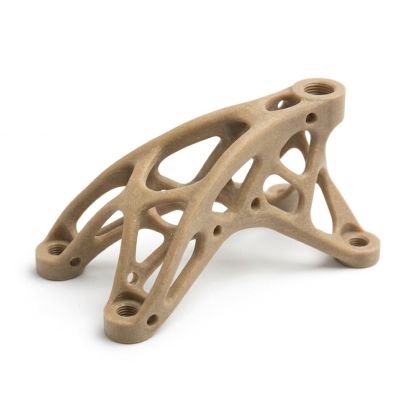
Polycarbonate (PC)
has high durability and strength characteristics. PC has many advantages that provide an ideal material in challenging environments and many
engineering applications.
For instance,
parts 3D printed in PC are often used in high heat applications because it is extremely resilient to heat. 3d printing is very effective in creating a very large amount of materials. Polycarbonate, therefore, is bent easily to room
temperature.
STRENGTHS
Lead Time 3 days, Low-cost, good quality
WEAKNESSES
Print layers are likely to be visible


For example: a product with dimensions of 50x50x100 mm can be ±0.5% with a lower limit of ±050 mm (±0.020″) bigger or smaller in any direction.
Yes, polycarbonate (PC) can be 3D printed, but it demands specialised equipment and precise calibration due to its challenging nature. Successful printing requires a printer capable of maintaining high temperatures and controlled environments to ensure optimal results. Utilising advanced 3D printing processes is essential to achieve the reliability needed for consistent, high-quality PC parts.
Polycarbonate (PC) is known for its impressive mechanical properties, including a high modulus of elasticity ranging from approximately 2634 to 2743 MPa and tensile strength reaching up to 67 MPa in the X-Y plane. 3d printed parts made from PC are well-suited for demanding end-use applications, such as injection molding, due to their strength and durability. This material provides a balanced combination of moderate flexibility, excellent impact resistance, and reliable performance at low temperatures. It is important to note that polycarbonate’s mechanical characteristics can differ depending on the orientation of the printed layers, exhibiting some anisotropic behaviour between the X-Y plane and the Z-axis.
Absolutely, polycarbonate (PC) outperforms PLA in nearly every mechanical property. It offers superior strength, enhanced impact resistance, and greater heat tolerance, making it a highly durable choice for demanding applications.
Yes, polycarbonate (PC) stands out as a stronger and more heat-resistant material compared to PETG. Both materials offer durability, but for engineering applications that require superior strength and heat tolerance, PC is the preferred choice.
Polycarbonate (PC) printing demands specialised hardware and strict environmental controls to achieve consistent, high-quality results. Essential requirements include a heated build platform maintained at 120°C and an enclosed chamber heated to around 90°C. For optimal bed adhesion, we recommend applying a Nano Polymer Adhesive, which significantly improves print stability and accuracy during the manufacturing process. Specific processes, such as controlled heating and careful adhesive application, are crucial for preventing warping and ensuring successful PC 3D printing.
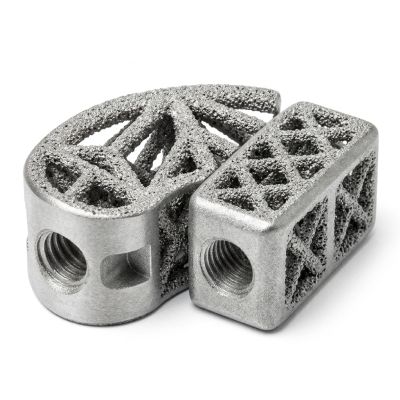
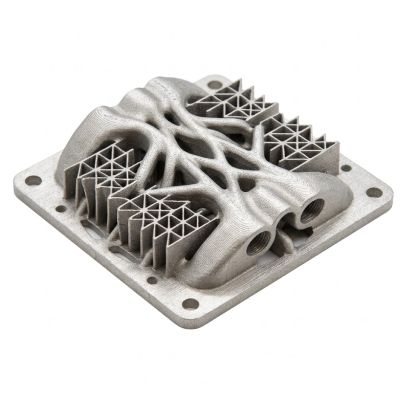
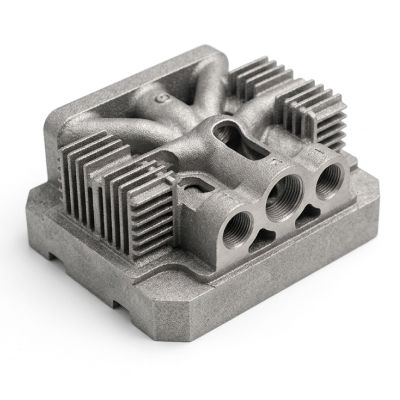
Additive manufacturing is reshaping production in various industries by enabling the rapid creation of functional prototypes and end-use parts. In the automotive sector, 3d printing is used to manufacture everything from engine components to custom dashboard trims, providing both speed and flexibility in the design process. Aerospace companies rely on additive manufacturing to produce lightweight, intricate components such as engine parts and satellite housings, where strength and precision are critical. The medical industry also benefits greatly from 3d printing, with applications ranging from custom implants and surgical guides to detailed anatomical models for pre-surgical planning. Our 3d printing service is well-suited to meet the unique demands of these industries, offering a wide range of premium materials—including polycarbonate—and advanced technologies like selective laser melting (SLM) and multi-jet fusion (MJF). With our expertise, we help customers produce high-quality components and prototypes that meet the rigorous standards of automotive, aerospace, and medical applications.
The process starts with preparing a detailed CAD model, which is then sliced for printing. The 3D printer heats the polycarbonate (PC) filament to a high temperature and deposits it layer by layer to build the part. PC requires stable temperatures and controlled conditions to ensure strength, clarity, and accuracy throughout the print.
IP protection is what most people are worried about when it comes to 3D printing because we get orders in which we have to copy the original design precisely.
We uphold strict confidentiality by default for all customer communication, projects, and models. Should you prefer a formal agreement, we offer standard NDAs or can review your own. Your trust is our priority.
Parts in as Fast in 3 business days
Get Instant Quote
Subscribe for workflow updates and insights.
Review our privacy policy for details.

Our website use cookies. By continuing navigating, we assume your permission to deploy cookies as detailed in our Privacy Policy.









![Nylon 12/PA [SLS]](https://cdn.prod.website-files.com/5e1b724edb4d525389fc347f/6623c1e1ca3e7be3c3df94c1_Nylon%2012%20%5BSLS%5D.jpg)



![Nylon12/PA [MFJ]](https://cdn.prod.website-files.com/5e1b724edb4d525389fc347f/6623c20d330fd69fdde60af7_Nylon%20PA%2012%20%5BMJF%5D.jpg)
.jpg)