Questions? Call us:
023 811 12681EN
Break down design barriers and grow your business with manufacturing available for you. Create and adapt.

Upload your CAD files, Receive your customized custom Fused Deposition Modeling (FDM) printing quote. Choose from a variety of process materials to suit your needs.
Our Copper
parts are made from solid, 100% copper using a precision lost-wax investment casting process. Copper naturally features a warm red-orange tone that gradually develops a darker brown, blue, or green patina over time, depending on
environmental exposure.
Each piece begins as a high-resolution wax 3D print,
which is used to form a mold for casting. This process allows for exceptional detail and accuracy, resulting in a refined, professional appearance. As the copper oxidizes, it forms a
naturally corrosion-resistant surface layer that enhances durability and character.
Accessible exterior surfaces
are polished to achieve a smooth finish. Due to the nature of the process, narrow or enclosed internal features may remain unpolished
and retain a natural cast texture.
STRENGTHS
Lead Time 2 weeks, Low-cost, good quality. Copper is an ideal material for electrical applications due to its ductility, mechanical resistance, and performance to corrosion.
WEAKNESSES
Limited dimensional accuracy


Copper 3D Printing Wax Casting is a manufacturing process that combines high-resolution wax 3D printing with traditional lost-wax investment casting. A wax model is printed first, then used to create a mold into which molten copper is poured. This method allows for complex geometries, fine surface detail, and solid metal parts that cannot be achieved through direct metal printing alone.
The finished parts are made from 100% solid copper. Copper is valued for its thermal and electrical conductivity, durability, and distinctive appearance. Over time, the surface naturally oxidizes, forming a protective patina that may range from brown to blue or green depending on the environment.
Lost-wax casting is well suited for intricate and detailed designs. Fine features, smooth curves, and complex shapes can be accurately reproduced from the wax model. This makes the process ideal for functional components, artistic pieces, and decorative parts that require a high-quality finish.
Exterior and well-reachable surfaces are polished to create a smooth, refined appearance. However, internal cavities or tight spaces that are not accessible during post-processing may retain a natural cast texture. Minor surface variations are normal and part of the casting process.
Yes, copper naturally reacts with air and moisture, forming an oxidized surface layer known as a patina. This process is normal and helps protect the metal from further corrosion. The final color depends on environmental conditions and can add character and uniqueness to each part
Designs should account for casting constraints such as minimum wall thickness, enclosed cavities, and internal channels. Extremely thin or fully sealed internal features may be difficult to cast or finish. Design guidelines are recommended to ensure the best results and structural integrity.
Copper 3D Printing Wax Casting is ideal for prototypes, functional parts, heat-transfer components, electrical elements, and decorative or artistic objects. It is especially useful when complex geometry, solid copper material, and a premium metal finish are required.
IP protection is what most people are worried about when it comes to 3D printing because we get orders in which we have to copy the original design precisely.
We uphold strict confidentiality by default for all customer communication, projects, and models. Should you prefer a formal agreement, we offer standard NDAs or can review your own. Your trust is our priority.
Parts in as Fast in 14 business days
Get Instant Quote
Subscribe for workflow updates and insights.
Review our privacy policy for details.

Our website use cookies. By continuing navigating, we assume your permission to deploy cookies as detailed in our Privacy Policy.









![Nylon 12/PA [SLS]](https://cdn.prod.website-files.com/5e1b724edb4d525389fc347f/6623c1e1ca3e7be3c3df94c1_Nylon%2012%20%5BSLS%5D.jpg)


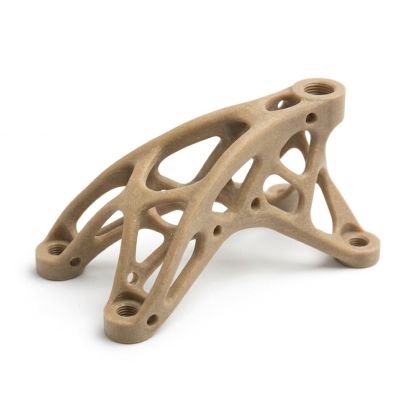

![Nylon12/PA [MFJ]](https://cdn.prod.website-files.com/5e1b724edb4d525389fc347f/6623c20d330fd69fdde60af7_Nylon%20PA%2012%20%5BMJF%5D.jpg)
.jpg)