Questions? Call us:
023 811 12681EN
Break down design barriers and grow your business with manufacturing available for you. Create and adapt.

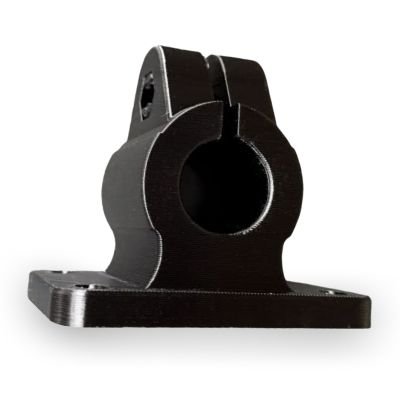
Upload your CAD files, Receive your customized custom Fused Deposition Modeling (FDM) printing quote. Choose from a variety of process materials to suit your needs.
It is the polymerization
addition to the raw Polyethylene terephthalate polymer. The glycol makes it more heat resistant and improves other physical properties—this helps create better products that are easy to
bend and mold.
PETG is a glycolic
polymer that is used in additive manufacturing. It is a thermoplastic material and very environmentally friendly as compared to the regular PVC material. It can be recycled entirely, and the filaments are widely used in 3D Printing. If you are not familiar with the word
PETG yet, you must know PET.
It is the glycolic
form of that plastic polymer. In 3D Printing, the extruder gets too hot, which makes it hard for some plastics, but as for PETG, it has excellent thermal stability,
which makes it ideal for the process.
STRENGTHS
Lead Time 3 days, Low-cost, good quality
WEAKNESSES
Print layers are likely to be visible


For example: a product with dimensions of 50x50x100 mm can be ±0.5% with a lower limit of ±050 mm (±0.020″) bigger or smaller in any direction.
PETG, or Polyethylene Terephthalate Glycol, is a glycol-modified version of PET designed to improve strength, dimensional stability, and usability in 3D printing applications. The addition of glycol enhances heat resistance and reduces brittleness, resulting in a versatile thermoplastic that is easy to bend, mold, and process. This makes PETG a popular choice for functional parts, prototypes, and custom components.
Standard PET can become brittle or difficult to process under heat, while PETG incorporates glycol to make the material more stable and flexible. This modification helps PETG maintain structural integrity during extrusion, lowers the risk of cracking, and ensures smoother printing. As a result, PETG delivers stronger, more reliable prints compared to traditional PET, particularly in applications requiring durability and impact resistance.
PETG is seen as environmentally friendly because it is fully recyclable and has a cleaner environmental footprint compared to PVC and some other thermoplastics. Its recyclability makes it suitable for sustainable manufacturing practices, especially in prototyping and low-volume production. Additionally, PETG does not release harmful chemicals during use, making it safer to handle and dispose of.
Yes, PETG is often regarded as food-safe, as it does not leach toxic chemicals into food or beverages. This makes it suitable for applications such as containers, tools, or components that come into contact with consumables. However, the final safety of 3D printed PETG parts can depend on factors such as printer cleanliness, additives, and post-processing methods.
PETG exhibits strong thermal stability, allowing it to withstand high temperatures during extrusion without deformation or burning. Unlike ABS or pure PET, PETG can be printed at relatively moderate temperatures, reducing warping and print failure. Its predictable performance under heat makes it beginner-friendly and suitable for both hobbyists and professional printers.
PETG is easier to print than materials like ABS because it offers strong thermal stability and reduced warping, even without specialised equipment. It adheres well to the print bed, produces consistent results, and is less prone to cracking or layer separation. These properties make it ideal for users who want durable, functional prints without complex print settings or advanced hardware.
PETG is widely used for functional, long-lasting parts, including prototypes, custom components, and complex objects. Its durability, chemical resistance, and flexibility allow it to perform well in mechanical assemblies and end-use applications. Because of its combination of toughness and ease of printing, PETG is a go-to filament for everyday functional parts that need to withstand regular stress, impact, or environmental exposure.
IP protection is what most people are worried about when it comes to 3D printing because we get orders in which we have to copy the original design precisely.
We uphold strict confidentiality by default for all customer communication, projects, and models. Should you prefer a formal agreement, we offer standard NDAs or can review your own. Your trust is our priority.
Parts in as Fast in 3 business days
Get Instant Quote
Subscribe for workflow updates and insights.
Review our privacy policy for details.

Our website use cookies. By continuing navigating, we assume your permission to deploy cookies as detailed in our Privacy Policy.









![Nylon 12/PA [SLS]](https://cdn.prod.website-files.com/5e1b724edb4d525389fc347f/6623c1e1ca3e7be3c3df94c1_Nylon%2012%20%5BSLS%5D.jpg)



![Nylon12/PA [MFJ]](https://cdn.prod.website-files.com/5e1b724edb4d525389fc347f/6623c20d330fd69fdde60af7_Nylon%20PA%2012%20%5BMJF%5D.jpg)
.jpg)