Questions? Call us:
023 811 12681EN
Break down design barriers and grow your business with manufacturing available for you. Create and adapt.
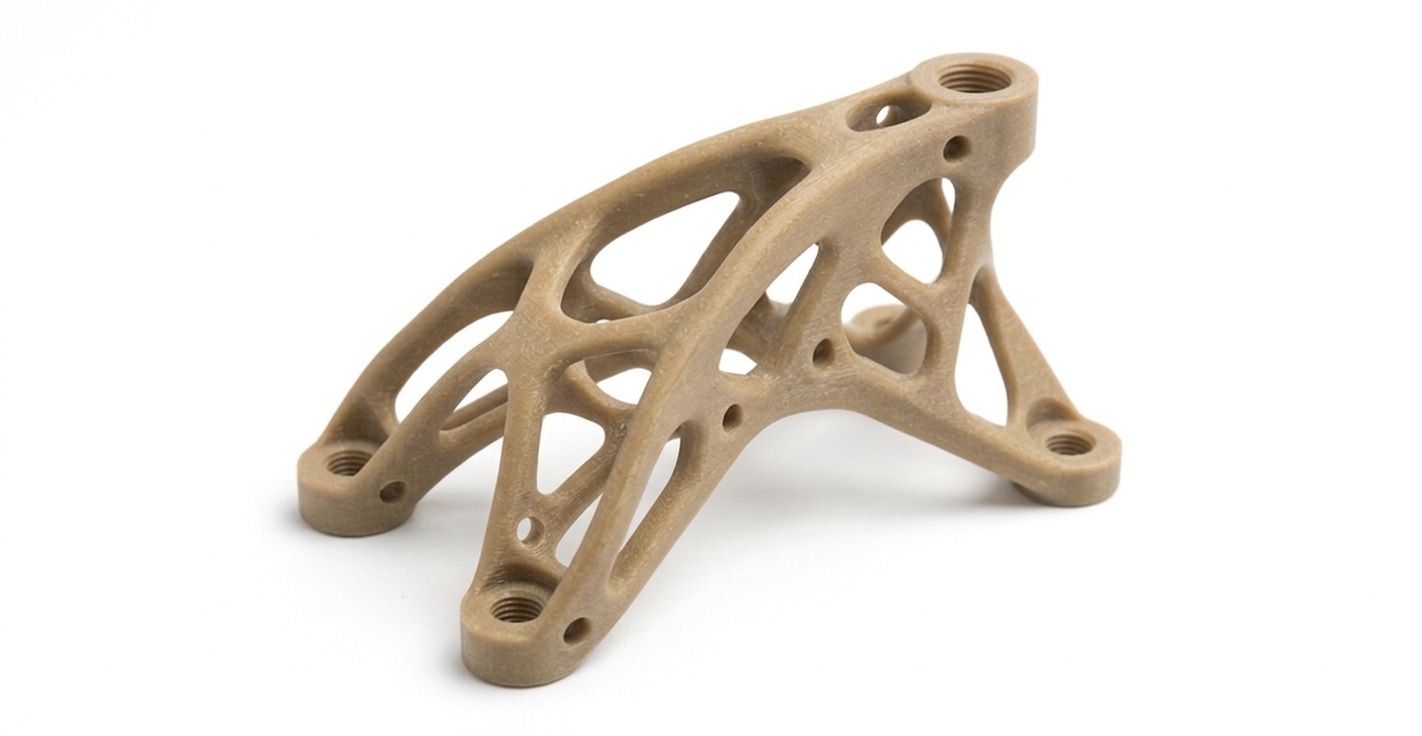
Upload your CAD files, Receive your customized custom Fused Deposition Modeling (FDM) printing quote. Choose from a variety of process materials to suit your needs.
PEEK (Polyetheretherketone)
is a high-performance semi-crystalline thermoplastic renowned for its extraordinary mechanical strength and resistance to extreme temperatures. As one of the most chemically resistant plastics available, it is often used as a lightweight, high-durability replacement for metal in the Aerospace and Medical sectors. It maintains its structural integrity in continuous
operating temperatures up to 250°C and can withstand short-term spikes even higher.
This material is celebrated for its biocompatibility and high-load capacity,
making it the "gold standard" for advanced surgical implants and dental prosthetics. Because PEEK possesses a modulus of elasticity similar to human bone, it reduces stress shielding and promotes better long-term outcomes in medical applications. Its natural resistance to gamma radiation and high-pressure steam sterilization ensures
it remains a sterile, reliable choice for clinical environments.
In Industrial and Automotive engineering,
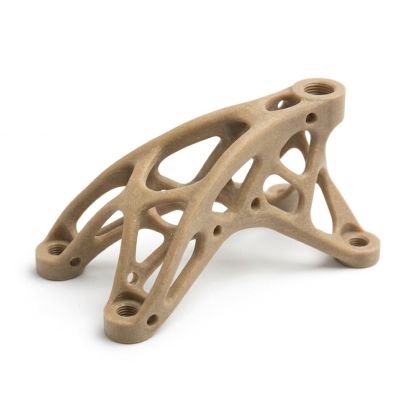
PEEK is the premier choice for parts subject to harsh chemical exposure and intense mechanical wear. By utilizing Fused Deposition Modeling (FDM), we can produce PEEK components with complex internal geometries that maximize efficiency while minimizing weight. Whether used for specialized engine parts, chemical processing valves, or
high-vacuum equipment, PEEK delivers the ruggedness of a metal with the versatile benefits of a polymer.
STRENGTHS
Lead Time 9 days, very high strength, thermal and chemical resistant.
WEAKNESSES
Print layers are likely to be visible
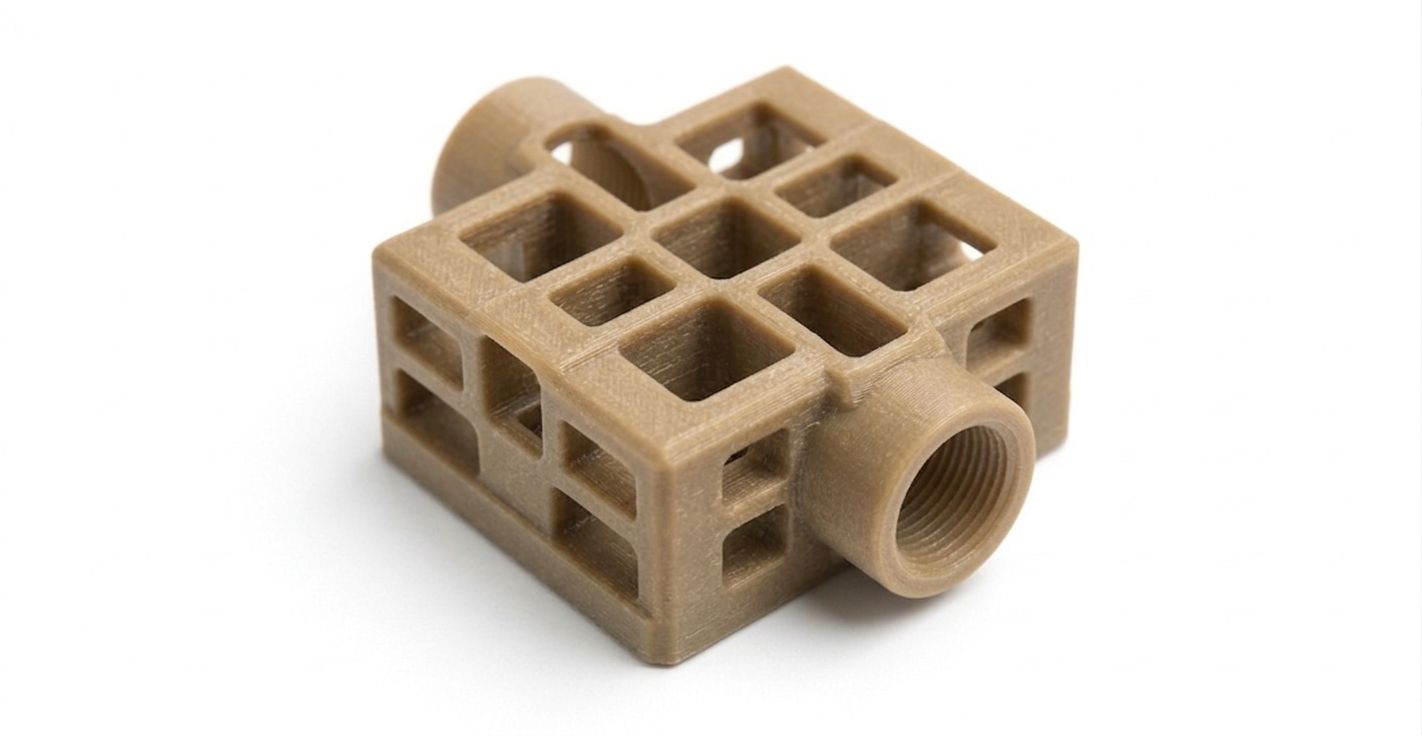


For example: a product with dimensions of 50x50x100 mm can be ±0.5% with a lower limit of ±050 mm (±0.020″) bigger or smaller in any direction.
To successfully 3D print PEEK, you must use an industrial-grade FDM printer capable of extreme heat. The extruder nozzle temperature must typically reach between 370°C and 450°C to properly melt the polymer. Additionally, a heated build plate set to at least 120°C–160°C is mandatory to ensure the first layer adheres correctly and to prevent the part from warping or popping off the bed during the print.
Yes, an actively heated and enclosed build chamber is one of the most critical requirements for PEEK. Unlike standard filaments, PEEK is semi-crystalline and reacts poorly to even slight temperature fluctuations. A chamber temperature maintained between 70°C and 140°C is essential to manage the material's crystallization process and prevent internal stresses from causing delamination or severe cracking as the part grows.
Discoloration in a PEEK print, such as brown or dark amber patches, usually indicates a failure in the crystallization process or thermal degradation. If the part is beige or tan, it has crystallized correctly; if it looks translucent or brown, the cooling was too rapid or the temperature was too low. Conversely, small black specks often point to "cooked" material residue inside a dirty nozzle or the use of lower-quality filament with impurities.
PEEK is highly hygroscopic, meaning it aggressively absorbs moisture from the surrounding air. Even a small amount of trapped humidity will turn into steam inside the nozzle, leading to bubbles, poor surface finish, and weakened structural integrity. It is best practice to dry PEEK filament in a dedicated oven at 120°C for at least 4 to 6 hours before printing and to keep it in a specialized "dry box" during the entire printing process.
PEEK is one of the few 3D printable thermoplastics considered a high-tech biomaterial. Its mechanical properties, specifically its modulus of elasticity, are very similar to human bone, which helps reduce "stress shielding" in orthopedic applications. However, only specific "medical-grade" PEEK filaments manufactured in ISO 13485-certified cleanrooms are suitable for long-term implantation; standard industrial PEEK should never be used for this purpose.
While both are high-performance polymers, PEEK generally offers superior overall performance. PEEK is a semi-crystalline plastic that can withstand continuous operating temperatures up to 250°C, whereas PEI (Ultem) is amorphous and typically capped at 170°C–180°C. PEEK also boasts better impact strength and chemical resistance, though PEI is often chosen for its lower cost and easier printability for parts that don't face the most extreme thermal limits.
Annealing is a post-processing heat treatment used to maximize the mechanical properties and chemical resistance of a part. For PEEK, this involves placing the finished print in an oven and slowly raising the temperature to roughly 150°C–200°C, holding it for several hours, and then cooling it very gradually. This process "settles" the crystalline structure, relieving internal stresses and ensuring the part can handle its maximum rated thermal and mechanical loads without deforming.
IP protection is what most people are worried about when it comes to 3D printing because we get orders in which we have to copy the original design precisely.
We uphold strict confidentiality by default for all customer communication, projects, and models. Should you prefer a formal agreement, we offer standard NDAs or can review your own. Your trust is our priority.
Parts in as Fast in 9 business days
Get Instant Quote
Subscribe for workflow updates and insights.
Review our privacy policy for details.

Our website use cookies. By continuing navigating, we assume your permission to deploy cookies as detailed in our Privacy Policy.









![Nylon 12/PA [SLS]](https://cdn.prod.website-files.com/5e1b724edb4d525389fc347f/6623c1e1ca3e7be3c3df94c1_Nylon%2012%20%5BSLS%5D.jpg)



![Nylon12/PA [MFJ]](https://cdn.prod.website-files.com/5e1b724edb4d525389fc347f/6623c20d330fd69fdde60af7_Nylon%20PA%2012%20%5BMJF%5D.jpg)
.jpg)