Questions? Call us:
023 811 12681EN
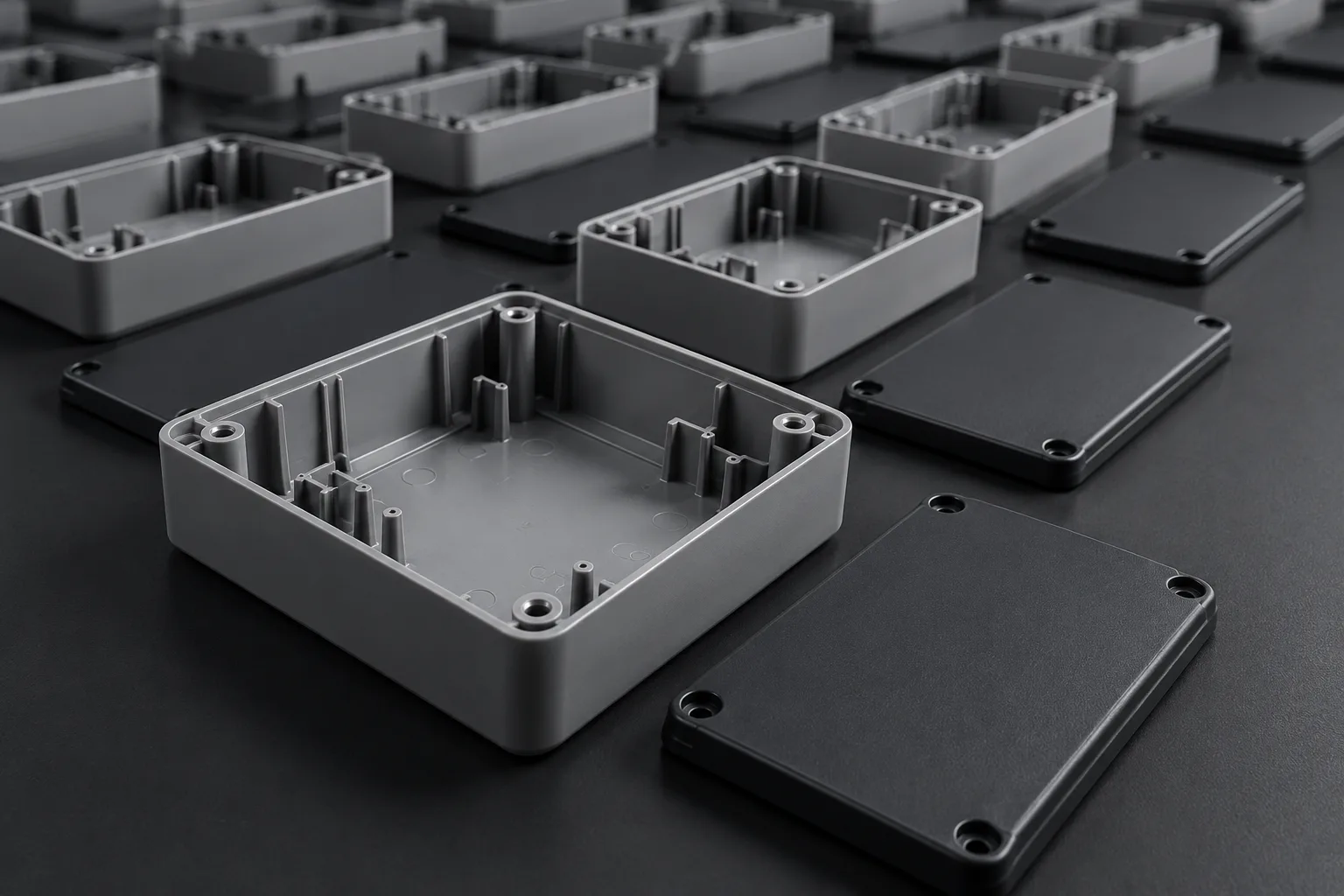
Injection moulding is coming soon to 3DMITECH. Register your interest now for early access, and we'll send you a quote as soon as the service goes live.
Production-quality plastic parts, from bridge tooling to repeat volume runs.
Built for parts that need consistent quality, repeatable detail and a low cost per part at volume.
Aluminium or soft-steel tools that let you validate designs and get early units to market quickly, before you commit to full production tooling.
Hardened steel moulds made for long, repeatable runs, with single or multi-cavity options to lower the cost of each part.
Once a tool is approved, every moulded part shares the same geometry and surface finish, run after run.
Injection moulding is at its most cost-effective for volume runs, where the tooling cost is spread across every part. Share your dimensions and expected annual volume, and we'll advise on the best route.
We plan to launch with a range of widely used commodity and engineering thermoplastics, chosen to suit everything from cosmetic housings to functional parts.
Tough and rigid with good surface quality. Ideal for enclosures and housings.
High impact strength and heat resistance, with clear grades available.
Lightweight and chemical resistant. Well suited to living hinges and clips.
Strong, wear resistant and heat tolerant. Glass-filled grades suit structural parts.
Stiff, low friction and dimensionally stable. Used for gears and bushings.
Flexible and rubber-like, for seals, grips and soft-touch parts.
Tough, low cost, and resistant to moisture and chemicals.
Excellent clarity for light guides and display windows.
Each finish is created on the mould tool itself, so it is repeated on every part.
Mirror-like polished tool surfaces for cosmetic and clear parts.
Fine stone or blasted tool finishes that reduce glare and hide minor marks.
Industry-standard textures for grip, a premium feel, and to hide fingerprints and flow lines.
A cost-effective finish for internal or non-cosmetic parts.
Follow these general guidelines to keep tooling simple and parts consistent.
Even walls cool evenly and reduce sink marks and warping. A typical range for many plastics is about 1–3 mm.
A small draft on vertical faces, typically 1–2°, helps parts eject cleanly. Textured faces usually need more.
Ribs add stiffness without thick, sink-prone walls. Keep them thinner than the wall they support.
Rounded corners improve material flow and reduce stress concentration.
Undercuts need side actions or lifters, which add tooling cost. Design them out where you can.
Tell us which faces are cosmetic, so gates and ejector marks can go in hidden areas.
Injection moulding is used wherever plastic parts are needed in volume with a consistent finish.
Housings, enclosures, handles and accessories.
Device casings, connectors, bezels and cable management parts.
Clips, brackets, interior trims and functional components.
Gears, bushings, covers and replacement parts for machinery.
A clear four-step route from CAD file to delivered parts. Not ready for tooling yet? Prototype with our 3D printing or CNC machining services first.
Send your CAD file (STEP preferred), material, quantity and finish requirements.
We review your design for mouldability and send you a quote.
The mould is made, and sample parts are produced for your approval.
Approved parts are moulded, inspected and delivered.
Common questions about our upcoming injection moulding service.
We're preparing to launch soon. Register your interest and we'll contact you as soon as the service goes live.
It depends on your project. Injection moulding typically becomes cost-effective at higher volumes, and for smaller runs we may recommend 3D printing or CNC machining.
Lead times vary with part complexity and tool type. Prototype tooling is typically faster than production tooling, and we'll give you a timeline with every quote.
A 3D CAD file (STEP or IGES preferred), plus a 2D drawing for critical tolerances, threads or cosmetic requirements.
Yes. Your files are handled confidentially. See our IP Protection page for details.
Register your interest today. Share your part details, and we'll send a quote and early access when the service launches.

Subscribe for workflow updates and insights.
Review our privacy policy for details.